
To unclog a choked drain, start with the gentlest method and work up: hot water and dish soap, then baking soda and vinegar, then a plunger, and finally a drain snake. Most kitchen and bathroom chokes in a Singapore home are clear with one of these, as long as you match the method to the blockage.
This guide walks through each step in order, explains what causes chokes in local flats, shows you what never to do, and tells you the point where a DIY attempt should stop and a plumber should take over before a small choke becomes a flooded floor trap.
What Causes a Choked Drain in a Singapore Home
Knowing the cause helps you pick the right fix and prevent the next choke. In local flats the usual culprits are predictable.
- Kitchen sinks: cooking grease and oil that solidify, plus food scraps and rice that swell in water.
- Bathroom drains and floor traps: hair, soap scum, and toothpaste building up over time.
- Toilet bowls: too much tissue, wipes (even ‘flushable’ ones), or foreign objects.
- Floor traps: the classic HDB and condo choke point where hair and debris collect and back up water across the bathroom floor.
Grease is the number one avoidable cause. It pours in as a liquid, then cools and hardens inside the pipe. For persistent or repeated chokes, the blockage may be deeper in the shared stack, which is a job for a professional plumbing service.
Step by Step: The Methods That Actually Work
1. Hot water and dish soap
Best for a slow kitchen sink caused by grease. Squirt a generous amount of dish soap into the drain, then pour in a kettle of very hot (not boiling, if you have PVC pipes) water. The soap breaks down grease and the heat helps it flow away. Give it a few minutes, then run the tap to check. This is the gentlest fix and often all a minor choke needs.
2. Baking soda and vinegar
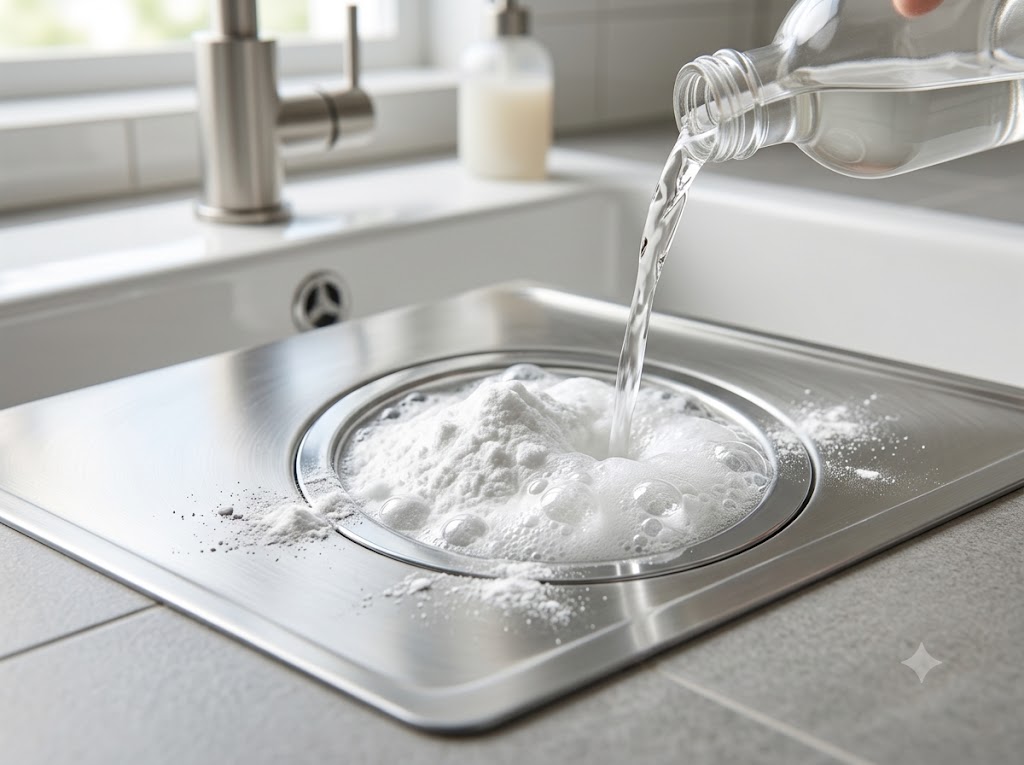
A chemical-free option for mild organic buildup. Pour about one cup of baking soda into the drain, followed by an equal amount of white vinegar. It will fizz; let it work for 30 minutes, then flush with hot water. It is gentle on pipes and safer than harsh chemical drain cleaners, which can damage fittings and are risky in a home with children.
3. Plunging
For a solid blockage you can push through. Use a flat-bottomed sink plunger for sinks and a flanged one for toilets, never mix them. Fill the sink with enough water to cover the plunger head, seal over the drain, and pump firmly up and down. For a double sink, block the second drain with a wet cloth so the pressure goes where you want it. Be patient; several attempts may be needed.
4. Drain snake or auger
For stubborn clogs deeper in the pipe. Feed the snake in until you meet resistance, then rotate to break up or hook the blockage and pull it out. Go gently: too much force can damage the pipe, and a snake used carelessly can scratch fittings. If you are unsure or the clog will not budge, this is the point to stop and call a plumber rather than risk damage.
| Never do thisDo not pour harsh chemical drain cleaners repeatedly; they can corrode pipes and are dangerous around children.Do not use a toilet plunger on a kitchen sink, it will not seal and spreads mess.Do not keep forcing a snake against a hard blockage; you may crack the pipe. |
When to Stop and Call a Plumber
Some chokes are a sign of a bigger problem that DIY cannot safely reach. Call a professional when:
- The choke keeps coming back after you clear it.
- More than one drain is slow or backing up at the same time, a sign of a blockage in the main stack.
- Water backs up into another fixture (for example, flushing the toilet makes the floor trap gurgle or overflow).
- There is a foul sewage smell or you suspect the blockage is deep in the shared pipe.
- Your methods have not worked and you would need a snake you are not confident using.
These point to a blockage beyond the fixture, often in shared pipework, where a plumber’s proper equipment clears it safely. A recurring floor-trap choke is one of the most common callouts our team handles, and you can reach a plumber in Singapore 24/7.
How to Prevent Chokes in the First Place
A few habits keep drains clear and save you the hassle.
- Never pour cooking grease or oil down the sink; let it cool and bin it.
- Fit drain strainers in sinks, showers, and floor traps to catch food, hair, and debris.
- Clear hair from bathroom drains and floor traps regularly.
- Flush drains with hot water periodically to stop grease and soap building up.
- Only flush toilet paper, never wipes, cotton, or kitchen towel.
How SG Handyman Engineering Clears Tough Chokes
When a choke is beyond a plunger, our team clears it properly with the right equipment, manual tools for accessible blockages and powered machinery for deep or stubborn ones, rather than pushing the problem further down the pipe. We identify why it choked so it does not simply return, quote a fixed price before starting, and back the work with a 30 to 90 day workmanship warranty.
Minor clearing jobs are affordable, and with over 20,000 projects completed and a 4.9-star rating we cover the whole island 24/7. Send a photo or a description over WhatsApp for a fast quote, or reach us through our contact page. If your choke turns out to be a symptom of a leak or damaged pipe, our leak repair service covers that too.
Frequently Asked Questions
What is the fastest way to unclog a drain?
For a greasy kitchen sink, hot water with dish soap is quickest. For a solid blockage, a plunger is fastest. Match the method to the cause, and start gentle before moving to a snake, which is more effective but riskier for your pipes.
Is baking soda and vinegar actually effective?
For mild organic buildup, yes. The fizzing reaction helps loosen soap and grease residue, and it is gentle on pipes and chemical-free. For a solid or deep blockage, though, you will need a plunger or a snake instead.
Are chemical drain cleaners safe to use?
Use them sparingly at most. Harsh chemical cleaners can corrode pipes over time and are hazardous around children and pets. Gentler methods are safer, and for stubborn chokes a plumber is a better option than repeated chemical use.
Why does my floor trap keep choking?
Floor traps collect hair, soap scum, and debris, and are a common HDB and condo choke point. If it recurs despite cleaning, the blockage may be deeper in the pipe and needs a plumber to clear it properly.
Who is responsible for a choked pipe in an HDB flat?
Blockages within your flat are generally your responsibility, while shared pipes may involve the town council or neighbours. HDB provides guidance for residents on living in an HDB flat, which helps clarify where responsibility sits.
Can a choked drain cause a flood?
Yes. A blocked floor trap or drain can back water up across the floor, and a choked toilet can overflow. Clearing chokes early prevents water damage, which is why a recurring choke is worth a professional look.
Should I use a drain snake myself?
You can for a simple, reachable clog, but go gently to avoid damaging the pipe. If you meet a hard blockage or are unsure, stop. A plumber has the right tools to clear it without cracking fittings.
Do I need a licensed plumber for a choke?
For a simple choke, no. For repeated or deep blockages, a professional is safer and more effective. Singapore’s water and sanitation standards are overseen by PUB, the national water agency, and a reputable plumber works to those standards.
Clear It Right, Not Just for Now
A choked drain usually clears with the gentle-to-firm sequence: hot water and soap, baking soda and vinegar, a plunger, then a snake. Match the method to the cause, avoid harsh chemicals, and know the signs, recurrence, multiple slow drains, or backing up, that mean the problem is deeper than DIY can reach.
If a choke keeps returning or will not clear, send us a message for a fast, fixed-price quote and let a professional clear it properly the first time.