
When your lights keep flickering, start by checking the simplest cause first: a loose bulb, then the switch, then the circuit load, and only then the wiring. Flickering lights range from a five-second fix to a genuine warning sign, and telling the two apart is what saves you money and keeps your home safe.
This guide shows you how to work through the causes in order, how you can safely handle yourself in an HDB flat or condo, and the signs that mean it is time to stop and call a licensed electrician. By the end you will know exactly what your flickering lights are trying to tell you.
| Key takeawaysOne bulb flickering is usually the bulb or a loose fitting, an easy fix.Lights flickering across several rooms points to a circuit or wiring issue that needs a professional.Flickering plus a burning smell, warm switch, or buzzing is a safety concern, not a nuisance.LED flicker is very often a dimmer-compatibility problem, not a fault. |
First, Narrow Down What Is Actually Flickering
Before you fix anything, figure out the scope. The pattern tells you how serious it is and where to look. A single light behaving badly is a very different problem from every light in the flat pulsing at once.
- One bulb, one fixture: almost always the bulb or its connection. Lowest risk.
- One room or one switch: likely the switch contacts or that circuit. Moderate.
- Multiple rooms, or flicker when a big appliance starts: a circuit-load or supply issue. Higher priority.
- Whole home, random, in an older flat: possible wiring or main-connection problem. Get it checked.
Hold that pattern in mind as you work through the causes below, which run from the quickest fix to the ones that need an electrical repair specialist.
The Common Causes of Flickering Lights, Easiest First
A loose or dying bulb
A bulb that is not screwed in fully makes intermittent contact and flickers as a result. It is the single most common cause and the easiest to rule out. Turn the light off, let the bulb cool, and tighten it. If it still flickers, the bulb may simply be reaching the end of its life, so swap in a new one.
An incompatible LED and dimmer combination
This is the number one reason LED lights flicker in modern Singapore homes. Older dimmer switches were designed for incandescent bulbs and expect a much higher load than a low-wattage LED draws. The mismatch makes the LED shimmer, especially at low brightness. The fix is to use LED-rated dimmable bulbs and, if needed, replace the old dimmer with a trailing-edge model built for LEDs.
A worn or loose light switch
Switch contacts wear over time. If wiggling a specific switch changes the flicker, or the flicker only happens on that switch, the contacts are the likely cause. Replacing a switch is straightforward for an electrician but involves working inside the wiring, so it is not a DIY job in Singapore.
An overloaded circuit
When several high-draw appliances share a circuit, switching one on causes a brief voltage dip that makes the lights flicker or dim. If your lights dip every time the air-conditioner compressor or water heater kicks in, the circuit is being pushed near its limit. Spreading heavy appliances across circuits usually settles it; if it persists, the circuit may be undersized for the load.
Ageing or damaged wiring
In older flats, deteriorating insulation and loose connections cause inconsistent power delivery and flickering. This is the cause that carries real risk, because the same loose or damaged connections that flicker your lights can also generate heat. Flicker across multiple rooms in an older home, especially with warm switch plates or a faint burning smell, points here and needs professional inspection, sometimes a full house rewiring.
Voltage fluctuations and supply issues
Sometimes the cause is outside your flat entirely, a fluctuation on the incoming supply or a large appliance elsewhere pulling voltage down briefly. If flicker appears across the whole home in step with heavy usage, an electrician can measure whether the instability is inside your installation or upstream of it.
| Do not ignore theseFlickering with a burning smell, discoloured socket, or buzzing sound: switch that circuit off and call an electrician.Lights dimming hard every time an appliance starts: your circuit or main connection may be struggling.Flicker that spreads to more rooms over days or weeks: treat as escalating, not settling. |
What You Can Safely Check Yourself
Homeowners can safely handle the low-risk end of this list. Work through it in order and stop the moment wiring is involved.
- Turn the light off, let the bulb cool, and tighten or replace it.
- If it is an LED on a dimmer, confirm the bulb is marked dimmable and the dimmer is LED-rated. Try a known-good LED bulb.
- Note whether the flicker follows the bulb to another fitting. If it does, it is the bulb; if it stays, it is the fitting or circuit.
- Check whether the flicker lines up with a heavy appliance switching on. If so, redistribute appliances across circuits.
- If the flicker is on a switch, a whole room, or multiple rooms, stop here. Opening switches or wiring is licensed work.
When Flickering Lights Mean You Should Call a Professional
Some flickering is a five-minute fix. The rest needs a trained eye. Call a licensed electrician when:
- Lights flicker in multiple rooms or across the whole flat.
- Tightening or swapping bulbs and checking dimmers did not solve it.
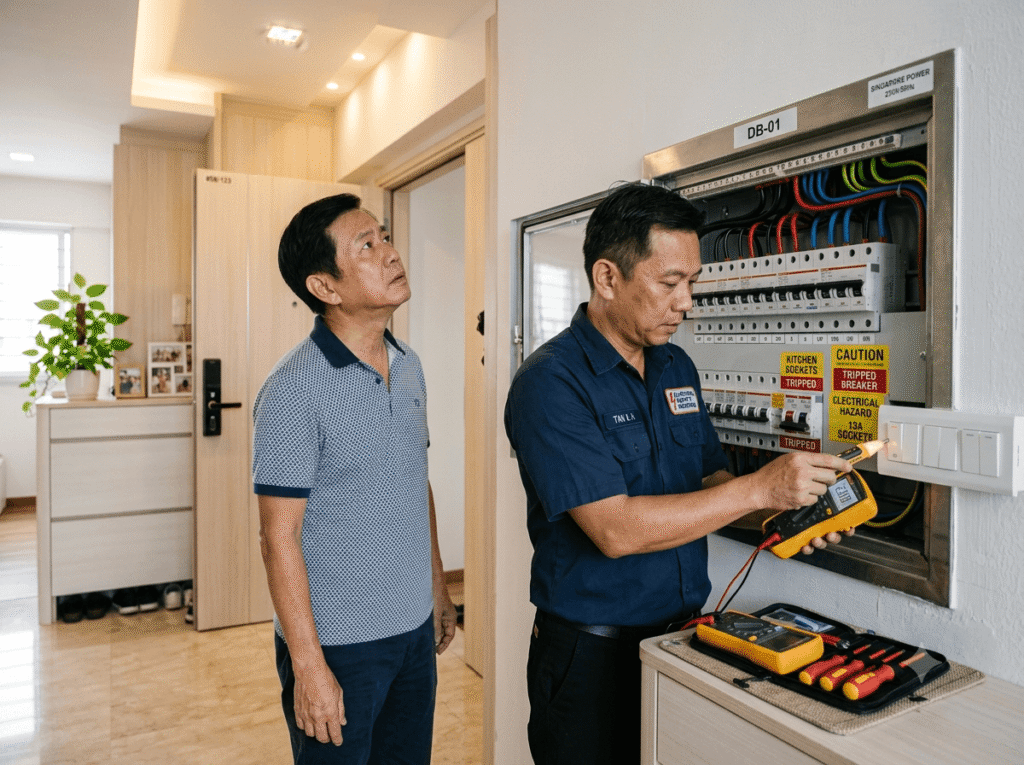
- You notice a burning smell, warm or discoloured switches, buzzing, or a breaker that also trips.
- The flicker started in an older flat that has not been rewired in years.
These are the calls our 24/7 team takes across the island, and our licensed, EMA-compliant electricians trace the fault rather than guessing. A flickering-light callout is exactly what a handyman electrician in Singapore is equipped to diagnose the same day.
How SG Handyman Engineering Fixes Flickering Lights for Good
Our engineering-trained team diagnoses the real cause instead of swapping parts and hoping. We test the circuit under load, check switch and fixture connections, verify dimmer and LED compatibility, and inspect wiring where the pattern points to it. You get a fixed quote before we start, with minor repairs from S$50 to S$80, and every job is backed by a 30 to 90 day workmanship warranty.
If the flicker turns out to be a lighting or dimmer job, our team handles the lighting repair and installation too, so one visit closes it out. Send a short video of the flicker over WhatsApp and you will usually get a quote within the hour.
| What you see | Most likely cause |
|---|---|
| One bulb flickers, follows to other fittings | Faulty or dying bulb |
| LED flickers, worse when dimmed | Dimmer / LED incompatibility |
| Flicker tied to one switch | Worn switch contacts |
| Lights dip when an appliance starts | Overloaded or undersized circuit |
| Multiple rooms flicker, older flat | Ageing wiring or loose connections |
Frequently Asked Questions
Are flickering lights a fire hazard?
They can be. Flickering caused by loose connections, damaged wiring, or an overloaded circuit generates heat and should be addressed quickly. Flickering from a loose bulb or dimmer mismatch is harmless once fixed. The safe move is to identify the cause rather than live with it.
Why do my LED lights flicker but the old bulbs did not?
LEDs draw far less power than incandescent bulbs, so an old dimmer designed for the higher load makes them shimmer. Use LED-rated dimmable bulbs and, if needed, a trailing-edge LED dimmer. This is a compatibility issue, not usually a fault.
Why are my lights flickering throughout the whole house?
Whole-home flicker points to a shared cause: a loose main connection, a voltage fluctuation, or a heavy appliance dragging voltage down. Because it affects everything, it should be inspected by a licensed electrician rather than treated bulb by bulb.
Can I replace a flickering light switch myself in Singapore?
No. Replacing a switch means working on fixed wiring, which by law must be done by a Licensed Electrical Worker. This requirement is set by the Energy Market Authority to keep electrical work safe and accountable.
How often should home wiring be checked?
A periodic inspection every few years is sensible, and sooner for older flats or if you notice flicker, warm fittings, or frequent trips. For HDB flats, electrical works follow set rules described in the HDB renovation guidelines.
Is flickering the same as dimming?
No. Flickering is a rapid on-off shimmer; dimming is a steady drop in brightness. Both can signal an electrical issue, but dimming that tracks appliance use usually means a circuit under strain, while random flicker points to connections or bulbs.
My lights flicker when the air-con starts. Is that a problem?
A brief dip when a compressor kicks in can be normal, but a strong or lasting flicker means the circuit is near its limit or a connection is loose. If it happens every time or worsens, have the circuit checked.
Could a power trip and flickering be related?
Yes. Loose connections and overloaded circuits cause both. If your lights flicker and your breaker also trips, treat them as one underlying fault. Our guide on why power keeps tripping covers the overlap.
Turn Flickering Into a Clear Next Step
Flickering lights sit on a scale from trivial to serious, and the scope tells you where you are. One bulb or an LED on a dimmer is yours to fix in minutes. Flicker across rooms, tied to appliances, or paired with heat, smell, or buzzing is the point to bring in a professional.
If tightening bulbs and checking dimmers did not settle it, send a quick video to our team for a fast, fixed-price quote and let a licensed electrician find the real cause before it becomes a bigger one.